Need help?
UK Customer Services0330 880 3600*
Open Monday to Friday 9:00am to 5pm, Saturday 8:30am to 4pm and closed Sundays.
*Calls are recorded for training and quality purposes.
Go back to:
All Country Guides
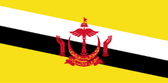
Brunei
Please note that if the Foreign, Commonwealth and Development Office have advised against all (or all but essential travel) to your destination, we cannot provide cover.
Click here to visit the FCDO's Foreign Travel Advice webpage.
- Intro
- Geography
- Travel
- Embassies & Visas
- Currency
- Health
Quick Facts
Official name: Negara Brunei Darussalam
Capital city: Bandar Seri Begawan
Languages spoken: Malay (official), English, Chinese
Population: Around 460,000
Currency: Brunei dollar (BND), interchangeable with Singapore dollar (SGD)
Time zone: GMT+8
Driving side: Left
Climate: Equatorial tropical, hot and humid year-round with heavy monsoon rains from November to December
Brunei, a small but wealthy nation on the island of Borneo, is known for its oil and gas wealth, Islamic heritage, and lush rainforests. The capital, Bandar Seri Begawan, showcases ornate mosques, palaces, and museums, while much of the country remains covered in pristine jungle. Strict laws reflect its deeply religious culture, but Brunei is also a safe and orderly destination with a reputation for hospitality.
Brunei shares the island of Borneo with Malaysia and Indonesia, occupying a small stretch of coastline on the South China Sea. Most of its terrain is low-lying coastal plain, rising to forested hills inland, with the country divided into two parts by the Malaysian state of Sarawak. The highest point is Bukit Pagon at 1,850 metres.
Travel around Brunei is straightforward, with good roads and taxis available in the capital. Driving is on the left. Public buses connect major towns, though services can be infrequent. Crime rates are extremely low, but penalties for drug offences and other crimes are very severe. Alcohol is banned for sale, though visitors can import small amounts for personal use.
Most visitors, including British nationals, can enter Brunei without a visa for short stays, though the length of stay depends on nationality. Passports must be valid for at least six months beyond the date of entry, and proof of onward travel may be required. Longer visits, employment, or study require a visa issued in advance. Nationals of Israel are not permitted entry.
The official currency is the Brunei dollar (BND), which is interchangeable at par with the Singapore dollar (SGD). Credit cards are widely accepted in hotels, restaurants, and shops, and ATMs are available in main towns. Cash is recommended for smaller establishments.
Healthcare facilities in Brunei are generally good for basic care, but specialist treatment may require evacuation to Singapore or elsewhere. Travellers should ensure they have comprehensive medical insurance with evacuation cover. Vaccinations against hepatitis A, hepatitis B, typhoid, and Japanese encephalitis may be advised, along with routine immunisations. The tropical climate means mosquito-borne illnesses such as dengue are a risk, so insect repellent and protective clothing are recommended.