
Need help?
UK Customer Services0330 880 3600*
Open Monday to Friday 9:00am to 5pm, Saturday 8:30am to 4pm and closed Sundays.
*Calls are recorded for training and quality purposes.
Go back to:
All Country Guides
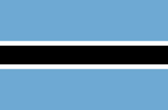
Botswana
- Intro
- Geography
- Travel
- Embassies & Visas
- Currency
- Health
Quick Facts
Official name: Republic of Botswana
Capital city: Gaborone
Languages spoken: Setswana, Kalanga, Sekgalagadi, English
Population: Around 2.6 million
Currency: Pula (BWP)
Time zone: GMT+2
Driving side: Left
Climate: Hot, rainy summers (October–April); cooler, dry winters (May–September)
Botswana is a landlocked nation in southern Africa, bordered by Namibia, South Africa, and Zimbabwe. Celebrated for its political stability and thriving diamond industry, it is also home to some of Africa’s most famous safari destinations. From the lush waterways of the Okavango Delta to the sweeping Kalahari Desert, Botswana offers stunning contrasts in landscape and wildlife.
Much of Botswana is covered by the Kalahari Desert, while the Okavango Delta—a UNESCO World Heritage Site—creates an oasis of wetlands rich in biodiversity. Other notable features include the Chobe River and the Tsodilo Hills, known for ancient rock paintings. The country is generally flat, with limited permanent water sources, making drought a recurring challenge.
Botswana’s main cities, including Gaborone and Francistown, are connected by good road networks. Rural travel often requires 4x4 vehicles, particularly during the rainy season, and wildlife frequently strays onto roads—especially at night. Domestic flights are commonly used to access safari camps in the Delta or Chobe National Park. Driving is on the left.
Most visitors, including UK and EU nationals, can enter Botswana without a visa for stays of up to 90 days within a year. Passports must be valid for at least six months after entry. Longer stays or work require permits from the Department of Immigration in Gaborone. The Botswana High Commission in London assists UK travellers, while an embassy in Washington, DC serves US citizens. Always check the latest entry requirements before travel.
The national currency is the pula (BWP), divided into 100 thebe. ATMs are widely available in larger towns and accept international cards. Credit cards are accepted at hotels, restaurants, and safari lodges, but cash is often needed in rural areas and local markets.
Healthcare in Gaborone and Francistown is generally adequate for routine issues, but rural services are limited. Travellers should carry medical insurance with evacuation cover. Tap water in cities is usually safe, but bottled water is recommended in remote areas. Malaria is present in the north, particularly around the Okavango Delta and Chobe, so prophylaxis and mosquito precautions are strongly advised.
Routine vaccinations should be up to date. Additional vaccines such as hepatitis A, typhoid, and rabies (for extended stays) may be recommended. HIV/AIDS prevalence remains high, so appropriate precautions are essential.