Need help?
UK Customer Services0330 880 3600*
Open Monday to Friday 9:00am to 5pm, Saturday 8:30am to 4pm and closed Sundays.
*Calls are recorded for training and quality purposes.
Go back to:
All Country Guides
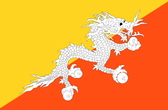
Bhutan
- Intro
- Geography
- Travel
- Embassies & Visas
- Currency
- Health
Quick Facts
Official name: Kingdom of Bhutan
Capital city: Thimphu
Languages spoken: Dzongkha, Tibetan and Nepalese dialects
Population: Around 2.3 million
Currency: Bhutanese ngultrum (BTN)
Time zone: GMT+6
Driving side: Left
Climate: Four distinct seasons - dry and pleasant from Oct–Nov and Apr–Jun, monsoon rains Jun–Aug, cold winters at higher altitudes
Bhutan, the “Land of the Thunder Dragon,” is a Himalayan kingdom celebrated for its dramatic mountain scenery, Buddhist traditions, and policy of prioritising Gross National Happiness over GDP. Visitors are drawn to its monasteries, colourful festivals, and unspoilt nature. Tourism is carefully managed to protect the country’s heritage and environment.
Bhutan is landlocked, bordered by China to the north and India to the south, east, and west. Its terrain ranges from subtropical lowlands in the south to towering Himalayan peaks in the north, including Kula Kangri at 7,553 metres. The lowest point is the Drangme Chhu River valley at 97 metres. Monsoon rains can trigger landslides, while fierce mountain storms gave the kingdom its nickname.
Tourism is tightly regulated: all foreign visitors (except Indian nationals) must book through licensed Bhutanese operators and pay a daily package fee covering accommodation, food, transport, and a guide. Entry is via Paro International Airport or overland at Phuentsholing. Independent backpacking is not permitted, ensuring tourism remains sustainable and controlled.
Road conditions can be difficult, particularly during the monsoon, and domestic flights are weather-dependent due to mountainous terrain. Despite this, Bhutan offers exceptional cultural and natural experiences for those willing to travel on its terms.
All visitors except Indian nationals require a visa for Bhutan. Applications are arranged in advance through licensed Bhutanese tour operators or their international partners. Visas are issued on arrival at Paro Airport or designated land borders once approved. Stays are usually for up to 14 days, with extensions available via the Tourism Council of Bhutan.
Bhutan has limited diplomatic representation abroad. The Royal Bhutanese Embassy in New Delhi manages many international relations. In the UK and USA, enquiries are generally handled via authorised travel agents or the Bhutan Tourism Council.
The Bhutanese ngultrum (BTN) is pegged to the Indian rupee (INR), and both are accepted. US dollars are also used in tourist areas. Exchange is available at banks and larger hotels. Credit card acceptance is growing in Thimphu and Paro but remains limited elsewhere, so cash is essential when travelling beyond the main centres. Traveller’s cheques are still sometimes preferred.
Medical facilities are basic compared with Western standards. The Jigme Dorji Wangchuck National Referral Hospital in Thimphu offers the most comprehensive services, but specialist care is limited. Supplies of medicines can be unreliable, and dental services may not meet international standards. Blood supplies are not always screened to Western levels.
Travellers should bring sufficient prescription medication and take out comprehensive medical insurance including evacuation cover. Drink bottled or boiled water, avoid ice, and eat only thoroughly cooked food.
Routine vaccinations should be up to date. Additional recommendations include hepatitis A, typhoid, rabies (for extended stays), and Japanese encephalitis for lowland areas in summer. Malaria is present in some southern districts.