Need help?
UK Customer Services0330 880 3600*
Open Monday to Friday 9:00am to 5pm, Saturday 8:30am to 4pm and closed Sundays.
*Calls are recorded for training and quality purposes.
Go back to:
All Country Guides
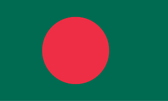
Bangladesh
Please note that if the Foreign, Commonwealth and Development Office have advised against all (or all but essential) travel to your destination, we cannot provide cover.
Click here to visit the FCDO's Foreign Travel Advice webpage.
- Intro
- Geography
- Travel
- Embassies & Visas
- Currency
- Health
Quick Facts
Official name: People’s Republic of Bangladesh
Capital city: Dhaka
Official language: Bangla (Bengali)
Population: Around 170 million
Currency: Bangladeshi taka (BDT)
Time zone: GMT+6
Driving side: Left
Climate: Tropical - hot, humid summers with heavy monsoon rains, mild dry winters
Bangladesh is a vibrant South Asian nation bordered by India and Myanmar, with a long coastline on the Bay of Bengal. Known for its fertile delta, bustling cities and rich cultural heritage, it faces challenges from flooding and cyclones but has also seen strong economic growth in recent decades. The country is famous for its resilient people, diverse cuisine, and lively traditions.
Most of Bangladesh lies within the Ganges–Brahmaputra–Meghna river delta, making it highly fertile but also vulnerable to flooding. Monsoon rains between June and October often bring widespread inundation, while cyclones remain a recurring hazard. The Chittagong Hill Tracts in the southeast provide hilly, forested terrain, including the country’s highest peaks. Bangladesh’s low elevation also makes it particularly vulnerable to climate change and rising sea levels.
Dhaka is lively and chaotic, with traffic and air quality often challenging for newcomers. Domestic flights and rail are expanding, but road travel can be slow and unpredictable. Rickshaws are still a mainstay of urban transport. Petty crime such as pickpocketing does occur, though violent crime against visitors is rare. Political demonstrations can occasionally turn disruptive, and natural hazards like flooding or cyclones may affect travel. Keep up with local news and official advice during your stay.
UK nationals need a visa to visit Bangladesh. Some can be obtained online or on arrival, but applying in advance is recommended. Passports should be valid for at least six months beyond your stay. Travellers of other nationalities should check requirements with the Bangladesh High Commission or their nearest embassy.
The Bangladeshi taka (BDT) is the official currency. ATMs are common in Dhaka and major cities, but less reliable in rural areas. Credit cards are generally accepted in international hotels and larger businesses, though cash remains essential for everyday purchases. Currency can be exchanged at banks and licensed exchange offices.
Routine vaccinations should be up to date. Hepatitis A, typhoid, and rabies are often recommended, depending on your itinerary. Medical facilities in Dhaka and Chittagong are improving but remain limited compared with Western standards, and rural healthcare is basic. Travellers should have comprehensive insurance, including cover for evacuation. Tap water is not safe to drink — stick to bottled or filtered water. Mosquito-borne illnesses such as dengue fever and malaria exist, so insect precautions are essential.