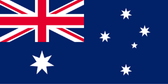
Australia
Australia became a commonwealth of the British Empire in 1901. It was able to take advantage of its natural resources to rapidly develop its agricultural and manufacturing industries and to make a major contribution to the British effort in World Wars I and II. Long-term concerns include pollution, particularly depletion of the ozone layer, and management and conservation of coastal areas, especially the Great Barrier Reef. A referendum to change Australia's status, from a commonwealth headed by the British monarch to an independent republic, was defeated in 1999.
The Federal Coalition of the Liberal and National parties was returned for a fourth term in October 2004. John Howard continues as Prime Minister for a fourth term. During its tenure, the Liberal Party has focused on stimulating domestic consumption by overhauling the tax system and cutting interest rates. Expansionary fiscal policy, as well as the deregulation of many domestic markets, has fostered significant increases in domestic consumption in recent years.
Australia continues as one of the world's leading “growth economies,” with GDP averaging 3.8% over the past decade, after significant economic reform over the last 20 years. Changes include deregulation of the financial system, reductions in tariffs and other trade barriers, the removal of most restrictions on foreign investment, the privatization of government-owned commercial enterprises, and the creation of contestable markets in previously monopolized industries such as energy and transport. The key risks to the Australian economy relate to the future path of house prices, wages growth and associated inflationary effects, the world economic outlook and the impact of domestic seasonal conditions on the agriculture sector. The European Union is Australia's largest economic partner, with the UK as the main gateway. The EU is the largest investor in Australia (providing 33% of all foreign investment) and the second largest market (after the US) for Australian investment (24% of all overseas investment). As for Asia, Japan, China, New Zealand and Korea, together with the US and UK, are Australia's six largest individual trading partners.
Australia views itself as a middle-ranking power, with global interests not solely defined by geography. Though located in the Asia-Pacific region, Australia has close ties and affinities with Europe and North America and a history of active engagement throughout Asia. The increased threat to international security and stability following 11 September 2001 led Australia to place particular emphasis on the long-standing special intelligence relationships with the US and UK. Australia’s governmnet supports long-term US strategic engagement in Asia as a fundamental contribution to regional stability and prosperity.
The attacks of September 11 2001 in the United States, and the Bali bombs in October 2002, irrevocably changed the security landscape for Australia. Australian Special Forces participated in the removal of the Taleban from Afghanistan. Together with the US and UK, in 2003 Australia provided aircraft, ships and over 2000 military personnel for the military campaign in Iraq. Australia deployed a further 450 troops to Iraq in May 2005.
Australia's immediate security environment has been affected by increasing instability in the Pacific. Following the successful UN sponsored, but Australian led, mission in East Timor in 1999, the government noted its substantial responsibility in the region. In July 2003, Australia led a 2000 strong Regional Assistance Mission in the Solomon Islands (RAMSI) made up of military, police and civilian administrators largely from Australia, but also including contributions from New Zealand, and other countries in the region. RAMSI has made good progress in restoring law and order and providing longer-term stability in the troubled island state. In 2004, with the prior agreement of the Government of Papua New Guinea, Australia hopes to place a significant number of police and administrators in the PNG bureaucracy in order to enhance security and accountability in the public service.
Violent crime is low and politics are stable. Business travelers to Australia should not encounter any particular difficulties. Visitors should make preparations as they would when traveling in the U.S. or Europe, using normal reservation services for travel and accommodation, plus taking into account the requirement to have either an electronic travel authority or a valid Australian visa.
The Australian authorities have carried out a number of arrests as a result of investigations into terrorist networks. In November 2005, the government introduced an urgent amendment to the country's counter-terrorism legislation, in response to an assessment by Australian intelligence agencies that a terrorist attack in Australia is feasible and could well occur. Subsequently on November 8 2005, the Australian police arrested 16 people in Sydney and Melbourne in a counter-terrorism operation designed to disrupt preparations for a terrorist attack. On March 31 2006, a further three people were arrested on terrorism charges in Melbourne.
Tropical Cyclones occur in some parts of Australia, mainly Queensland, Northern Territory and Western Australia. The Cyclone season normally runs from November to April.
Anti-globalization protesters have become a fixture on the landscape for international events in Australia.
Australia has very little history of violence by disaffected groups. Environmentalists and anti-nuclear activists sometimes stage rowdy protests against entities that draw their ire, though only a few controversial corporations have come in for this kind of attention. Environmentalists and neighborhood groups protesting noise levels from the newly constructed third runway at Sydney's Kingsford Smith international air terminal have staged intermittent demonstrations at and near the airport since late 1994, sometimes disrupting air travel timetables. Aboriginal activists who allegedly received training in Libya in recent years have not altered the generally nonviolent nature of the Aboriginal land-rights campaign. Neither ethnic militants nor Aboriginal activists have any history of staging attacks against multinationals, but new arrivals should nevertheless check any neighborhood where they intend to live for possible ethnic tensions.
The Australian government uses navy ships to patrol waters between Indonesia and northern Australia to prevent people-smugglers dumping boatloads of asylum-seekers along the remote coastline. Those caught are sent to detention centers set up by Australia in 2002 on the impoverished Pacific nations of Papua New Guinea and Nauru until their asylum applications have been processed. In addition to the government’s so-called "Pacific solution," thousands of asylum seekers are also being held in camps around Australia. Protesters held several mass rallies in 2004 calling for the government’s policy to change.
Australian authorities are rigorous in their efforts to keep out any pests and diseases that could affect plant, animal and human health. All luggage is x-rayed on arrival, whether arriving by plane with visitors or by mail. Any items of quarantine concern are further inspected, treated and, if necessary, confiscated and destroyed.