Need help?
UK Customer Services0330 880 3600*
Open Monday to Friday 9:00am to 5pm, Saturday 8:30am to 4pm and closed Sundays.
*Calls are recorded for training and quality purposes.
Go back to:
All Country Guides
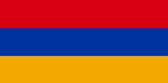
Armenia
Please note that if the Foreign, Commonwealth and Development Office have advised against all (or all but essential travel) to your destination, we cannot provide cover.
Click here to visit the FCDO's Foreign Travel Advice webpage.
- Intro
- Geography
- Travel
- Embassies & Visas
- Currency
- Health
Quick Facts
Official name: Republic of Armenia
Capital city: Yerevan
Official language: Armenian
Population: Around 3 million
Currency: Armenian dram (AMD)
Time zone: GMT+4
Driving side: Right
Climate: Hot, dry summers and cold, snowy winters - especially in the mountains
Armenia is a landlocked country in the South Caucasus, wedged between Turkey, Georgia, Azerbaijan, and Iran. Famous for being one of the earliest Christian nations, it’s packed with ancient monasteries, dramatic scenery, and a culture that blends tradition with a lively modern scene. Yerevan, its pink-stone capital, is older than Rome and today offers a café culture, museums, and easy access to the surrounding mountains.
More than 90% of Armenia sits above 900 metres, giving it a rugged, mountainous look. Mount Aragats towers at 4,090 m, while Lake Sevan, one of the largest freshwater high-altitude lakes in the world, is a natural highlight. The country sits in a seismically active zone, so earthquakes are possible. Summers can be scorching, while winters bite hard, especially in the highlands. Spring and autumn are mild and generally the best time to visit.
Most visitors arrive via Yerevan’s Zvartnots International Airport, which has connections to major European and Middle Eastern hubs. Within the country, travel is mostly by road - buses and shared minibuses (marshrutkas) are common, but rural roads can be rough, and driving standards vary. The majority of visits are safe and trouble-free, though petty crime like pickpocketing happens in busy areas. Travellers should avoid border regions with Azerbaijan due to the long-standing Nagorno-Karabakh conflict, where tensions can flare.
British nationals need a visa, but Armenia makes it simple: e-visas and visas on arrival are available for short visits. Passports should be valid for at least six months beyond your trip. Stays longer than a few weeks may require a residence permit from the Armenian Ministry of Foreign Affairs.
The local currency is the Armenian dram (AMD). Cash is still king outside Yerevan, though card payments are becoming more accepted in the capital and larger towns. ATMs are easy to find in cities, but less so in rural areas, so carrying dram is essential if travelling off the beaten path. US dollars and euros can be exchanged at banks and currency exchanges.
Healthcare in Yerevan is adequate for basic needs, but hospitals outside the capital are limited and may lack equipment or medicines. Bring enough prescription medication for your stay, as availability isn’t guaranteed. Comprehensive travel insurance with medical evacuation cover is strongly recommended. Routine vaccinations should be up to date, with hepatitis A, hepatitis B, typhoid, and rabies advised depending on activities. Tap water quality varies — bottled or boiled water is the safer choice.