
Need help?
UK Customer Services0330 880 3600*
Open Monday to Friday 9:00am to 5pm, Saturday 8:30am to 4pm and closed Sundays.
*Calls are recorded for training and quality purposes.
Go back to:
All Country Guides
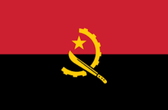
Angola
Please note that if the Foreign, Commonwealth and Development Office have advised against all (or all but essential travel) to your destination, we cannot provide cover.
Click here to visit the FCDO's Foreign Travel Advice webpage.
- Intro
- Geography
- Travel
- Embassies & Visas
- Currency
- Health
Quick Facts
Official name: Republic of Angola
Capital city: Luanda
Official language: Portuguese
Population: Around 36 million
Currency: Angolan kwanza (AOA)
Time zone: GMT+1
Driving side: Right
Climate: Hot and humid on the coast, cooler inland, with clear rainy and dry seasons
Angola is one of Africa’s largest countries, with landscapes ranging from Atlantic beaches to tropical forests and the vast reaches of the Namib Desert. Its Portuguese heritage still influences the architecture, food, and language, while Luanda has developed into a busy port city and one of Africa’s largest urban hubs.
Travellers should be aware that while Angola has huge potential for adventure, security concerns remain in some areas. Crime in Luanda can be high, landmines are still present in remote regions, and the province of Cabinda is considered unstable. It’s important to follow official advice and exercise extra caution.
Angola is bordered by Namibia, Zambia, the Democratic Republic of the Congo, and the Atlantic Ocean. It covers over 1.2 million square kilometres, making it Africa’s seventh-largest country. Coastal areas are tropical and humid, while the central plateau is cooler and drier. The south is semi-arid, with desert conditions closer to Namibia. The rainy season runs from November to April, while June to October is typically dry and more comfortable for travel.
Infrastructure is improving after years of civil war, but travel can still be challenging. Roads outside major cities are often in poor condition, and remote travel is complicated by the risk of landmines. In Luanda, traffic congestion is severe and petty crime is common, especially at night. The Cabinda enclave should be avoided due to ongoing unrest. Always consult FCDO advice before travelling, and plan transport carefully.
All visitors require a visa for entry, which must be arranged in advance at an Angolan embassy or consulate. Passports should be valid for at least six months beyond entry. A yellow fever vaccination certificate is required. Work permits are mandatory for employment, and additional paperwork may be needed for extended stays.
The Angolan kwanza (AOA) is the official currency. US dollars are sometimes accepted in Luanda, but notes must be in excellent condition. Credit cards are increasingly used in high-end hotels and restaurants, though cash remains the most reliable option. ATMs exist in major cities but may not always work.
Yellow fever vaccination is compulsory for entry. Other recommended vaccinations include hepatitis A, hepatitis B, typhoid, and rabies depending on your plans. Malaria is widespread, and antimalarial medication is strongly recommended. Cholera and mosquito-borne diseases such as dengue are also a risk. Healthcare is very limited outside Luanda, and even in the capital complex conditions may require evacuation. Comprehensive travel insurance with evacuation cover is essential.