Need help?
UK Customer Services0330 880 3600*
Open Monday to Friday 9:00am to 5pm, Saturday 8:30am to 4pm and closed Sundays.
*Calls are recorded for training and quality purposes.
Go back to:
All Country Guides
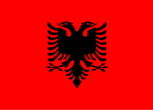
Albania
Please note that if the Foreign, Commonwealth and Development Office have advised against all (or all but essential travel) to your destination, we cannot provide cover.
Click here to visit the FCDO's Foreign Travel Advice webpage.
- Intro
- Geography
- Travel
- Embassies & Visas
- Currency
- Health
Quick Facts
Official name: Republic of Albania
Capital city: Tirana
Official language: Albanian
Population: Around 2.8 million
Currency: Albanian lek (ALL)
Time zone: GMT+1
Driving side: Right
Highest point: Maja e Korabit (2,764 m)
Climate: Hot dry summers on the coast, cooler and wetter inland
Albania is a small but remarkably diverse Balkan nation, bordered by Greece, North Macedonia, Montenegro, and Kosovo, with coastlines on both the Adriatic and Ionian Seas. After decades of isolation, it has opened up to tourism, offering a mix of dramatic mountains, pristine beaches, and a rich cultural heritage influenced by Ottoman, Roman, and communist-era history. Its growing popularity makes it one of Europe’s emerging travel hotspots.
Albania’s landscapes are varied - from the jagged peaks of the Albanian Alps to fertile lowlands and long stretches of coastline. The country sits in a seismically active region, and flash flooding can occur in low-lying areas. Coastal regions enjoy hot Mediterranean summers, while inland areas see cooler temperatures and more rainfall, particularly in winter.
Travellers are increasingly drawn to Albania for its unspoilt beaches, mountain hiking, and historic towns. Roads are improving but can still be challenging, particularly in rural areas, and driving standards vary, so caution is advised. Public transport is limited, with minibuses (furgons) commonly used for regional routes. Petty theft can occur in busier towns, so take standard precautions. Despite this, Albania is generally safe and welcoming, and its affordability is part of the appeal.
UK nationals can visit Albania without a visa for up to 90 days in a 180-day period. A valid passport is required for entry. For longer stays or other visa categories, check with the Albanian Ministry of Foreign Affairs or the nearest embassy.
The Albanian lek (ALL) is the official currency. While card use is increasing in larger towns and tourist hubs, cash is still widely used, especially in rural areas. ATMs are common in cities but may not always work reliably in smaller destinations, so carrying some cash is advisable.
Healthcare standards in Tirana and larger cities are improving but can still lag behind Western Europe, especially in rural areas. Pharmacies may not stock all prescription medicines, so bring any essentials with you. No mandatory vaccinations are required, but hepatitis A, hepatitis B, typhoid, and rabies vaccinations may be recommended depending on your activities. Comprehensive travel insurance with medical cover is strongly advised.